The Living Meals: Sharing Cultures in a Healthy Kitchen
Cultural Gastronomy • Organic Meal Flows • Farm-to-Table UX
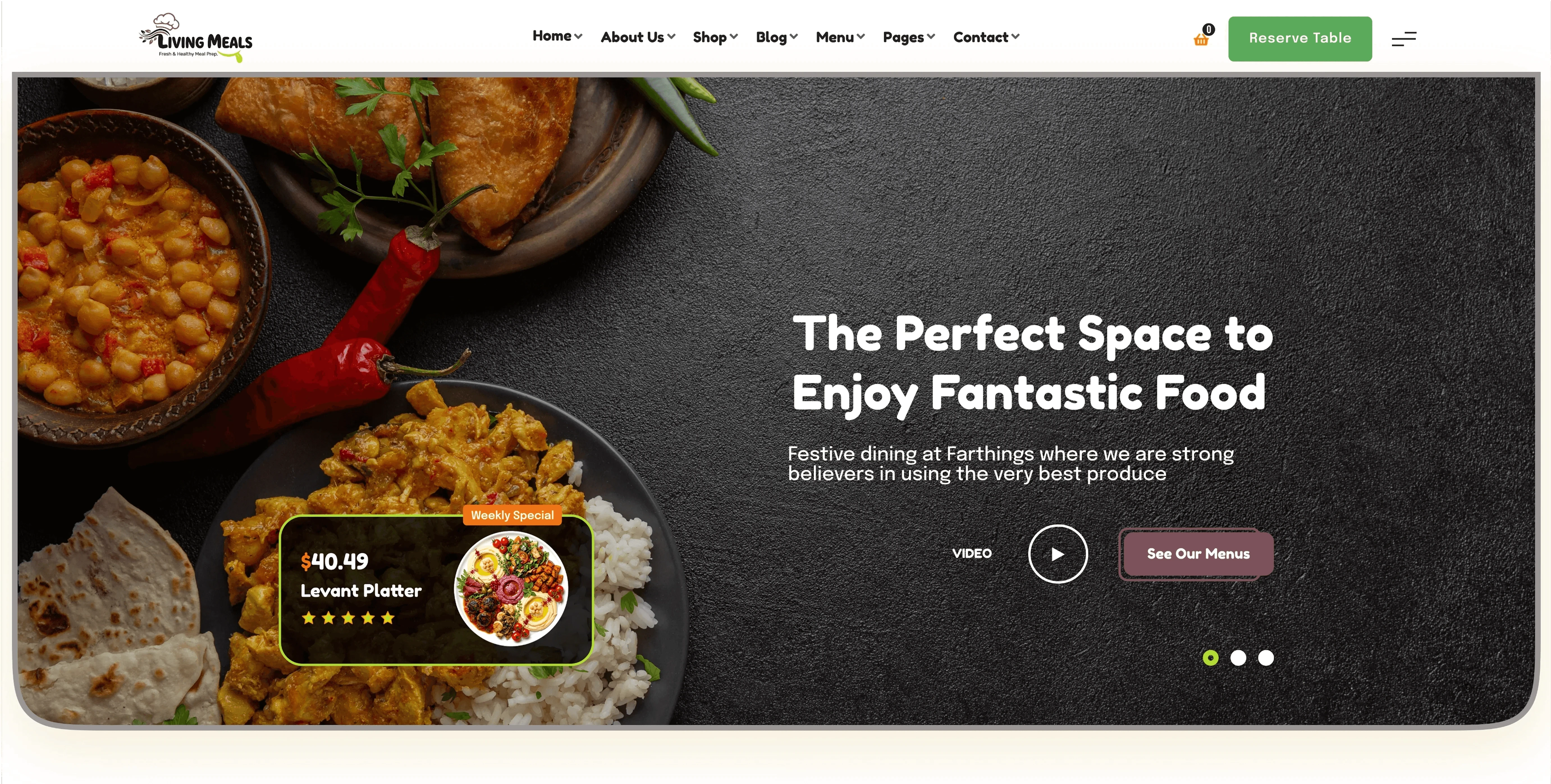
Context
Designed a specialized mobile web and application experience tailored to streamline nutritional tracking and custom meal ordering for health-conscious users.
Role
Product Designer
Timeline
6 Weeks
Core features
Macro-Syncing: Intuitive tracking interface designed with low-friction controls for effortless daily logging.
Dietary Filtering: Dynamic dietary filters and customizable ingredient transparency views tailored to health goals.
Adaptive Recommendations: Smart meal recommendation experience driven by real-time nutritional preferences and user targets.
Statistics and Secondary Research
Research began by analyzing quantitative platform metrics alongside qualitative insights from user interviews. This dual approach pinpointed critical journey friction, highlighting a core mismatch between complex, number-heavy dietary demands and the simple, intuitive routines health-conscious individuals actually prefer.
12%
Menu Customization Rate
Findings from Primary Research
Secondary research findings, targeted usability evaluations, and structured interviews with a diverse cohort of members—ranging from young food enthusiasts to elderly culinary seekers—were synthesized to meet rigorous industry standards and insights from online research. This process identified unique barriers encountered by each demographic within the digital platform.
Light Mode
Users prioritize clear, high-contrast interfaces for effortless recipe reading and intuitive meal exploration.
Quick Access
Streamlined navigation prioritized over complex filtering to simplify daily meal selections based on user preference data.
Mobile First
74% of participants rely on mobile devices to browse curated menu collections and execute orders remotely.
The Redesign
Insights derived from a comprehensive 1-week diary study and remote usability sessions directly informed a streamlined interface direction, purposefully structured to eliminate logging friction and optimize daily nutritional workflows.


Design validation
Data-backed design validation relies on rigorous behavioral evaluation against core user cohorts. The following testing methodologies ensure performance goals successfully bridge complex culinary data with intuitive user needs.
User Interviews
Extracting qualitative insights from target users to resolve high-friction ordering barriers.
Engagement Maps
Pinpointing exact hot spots to maximize engagement across recipe and menu discovery interfaces.
Navigation Testing
Measuring path efficiency to guarantee effortless discovery of ingredient views.


"The fluid browser navigation makes customizing meals and checking out feel completely seamless, just like using a native app."
-Nutrition Cohort Member
Impact Created
Continuous benchmark telemetry and post-testing analytics indicate strong behavioral improvements, pointing toward tangible gains in daily user retention and checkout completion following initial rollout.
Project Artifacts
The following deliverables document the strategic design process, approach, and iterative problem-solving applied throughout The Living Meals case study.
Strategy & Insights
Transitioning from legacy fragmentation to a responsive platform experience relies entirely on data-backed design frameworks. Prioritizing fluid browser-based navigation successfully bridges culinary complexity with seamless ordering workflows.


Component Library
Establishing a modular component library to enforce visual and navigational consistency across the entire web application interface.
Workflow Optimization
Utilizing rapid design sprints to refine core conversion pathways and eliminate friction throughout the digital user journey.
Experience Validation
Merging qualitative feedback with interaction telemetry to simplify strict dietary constraints within an app-like browser experience.
